
Why Relationships Are Ending and Beginning Right Now: The Spiritual Truth
We’ve all felt that moment when the room suddenly feels different with them in it – not warmer, but heavier somehow, like the air itself is trying to tell you something your mind isn’t ready to hear. When relationships suddenly change, your intuition already knows why, even if your mind hasn’t caught up yet. Understanding the signs a relationship is ending often begins with these subtle body-based signals—the ones your logical mind wants to dismiss but your intuition has been tracking all along. Whether you’re sensing the slow fade of a long-term partnership or the unexpected spark of something new, your body holds wisdom that deserves your attention.
You have to notice it too? All around us, relationships are shifting dramatically. Ending unexpectedly, beginning out of nowhere, transforming in ways that surprise everyone involved. If it’s not happening to you directly, you’re likely watching it unfold with people you know.
Here’s what your intuition might already be telling you: What is no longer aligned with your highest good will not stay. And on the flip side, what’s meant for you will find its way to you with surprising ease.

Based on my experience and study, the spiritual reasoning behind these relationship transitions involves energy shifts and collective awakening, topics we could explore in more depth at another time. For now, take comfort in knowing that these endings, though painful, are ultimately clearing space for something better aligned with who you’re becoming, which may not be a relationship at all.
Recognizing the Signs: When Your Intuition Knows a Relationship Is Ending
The Slow Simmer Effect
Long-term couples are separating in ways that seem sudden to outsiders, but in my experience working with clients, your intuition has likely been sending signals for months or even years. What if you don’t recognize the intentional signals your reality is giving you or feel connected to your intuition? That is why you are here. To learn how to start understanding your spiritual strengths and use them to empower yourself in life.
Research confirms that the average relationship that ends lasts about 2 years and 9 months, though many experience this “slow simmer” effect for much longer. Like the proverbial frog in slowly boiling water, the signs accumulate gradually:
- Persistent disconnection: You keep trying to reconnect, but something invisible blocks the way
- Physical tension: Your body tightens when they enter the room, a stress response you can’t explain away
- Surface-level conversations: Talks feel forced and never reach emotional depth anymore
- Wandering future visions: You catch yourself imagining futures that don’t include them
- Quiet inner knowing: A settled sense that something fundamental has shifted, even when nothing specific has “happened.”
What Your Body Already Knows
Long before your mind constructs a logical case for staying or leaving, your body has been keeping score. In my work with clients, I’ve noticed that the body often speaks first and loudest—if we know how to listen.
Your nervous system functions as an early warning system, registering emotional safety (or its absence) through physical sensation. Here’s what to pay attention to:
Chest and heart space: When you think about spending time with your partner, notice what happens in your chest. Does it expand with warmth and anticipation? Or do you feel a subtle tightening, a protective closing? Your heart center responds to emotional truth before you’ve formed a single thought about it.
Solar plexus (upper belly): This area often holds our sense of personal power and confidence. A persistent heaviness, churning, or “pit in your stomach” feeling around your relationship may indicate that something is draining your vital energy rather than nourishing it.
Breathing patterns: Pay attention to how you breathe around your partner. A shallow, held breath often signals that your system doesn’t feel safe enough to relax fully. Deep, easy breathing suggests your nervous system recognizes this person as a source of calm rather than stress.
In your sleep: Sleep disruptions that began when relationship tension surfaced aren’t a coincidence. Your subconscious mind processes relationship dynamics during rest, and unresolved concerns often manifest as difficulty falling asleep, waking at odd hours, or dreams that leave you unsettled.
Energy levels: notice whether interactions with your partner leave you energized or depleted. Healthy relationships create energy through connection. If you consistently feel exhausted after time together—even when it’s pleasant—your body may be working overtime to maintain a connection that no longer flows naturally.
These aren’t random symptoms to push through or medicate away. Research shows that these bodily sensations are your nervous system’s way of signaling distress in relationships. What you feel is your body’s honest communication about the state of your relationship. The question isn’t whether to trust these signals, but whether you’re willing to listen to what they’re telling you. Ignoring your inner knowing doesn’t make it disappear; it only delays the inevitable alignment.

How to Navigate a Relationship Ending with Wisdom and Grace
1. Practice Sacred Self-Care
Your intuition speaks most clearly when your nervous system is calm. Research in neuroscience shows that chronic stress impairs our decision-making abilities and emotional processing. When we’re relaxed and feel safe, we can better access our inner wisdom and make clearer decisions.
Create a sanctuary for yourself:
- Minimize obligations: Say no to non-essential “have to’s.”
- Nurture your senses: Wrap yourself in soft blankets, sip warming drinks, and watch uplifting content.
- Honor your need for solitude: Your inner wisdom needs quiet space to be heard.
- Choose your company wisely: Surround yourself only with peaceful, supportive energy.
Remember: Your heart and nervous system are recalibrating. Research indicates that social support enhances immune function and reduces stress levels, whereas isolation can compromise both physical and mental health. Treat yourself as tenderly as you would a dear friend going through this transition.
2. Transform Through Reflection
Relationships are mirrors that reflect our unhealed aspects. Use this transition as an opportunity for deep inner work and self-discovery:
Questions to explore with your intuition:
- What patterns kept repeating in this relationship?
- Which of my boundaries were compromised?
- What fears or insecurities were triggered?
- How did my typical response patterns show up?
- What is my soul trying to teach me through this experience?
Research on somatic awareness suggests that paying attention to bodily sensations can provide valuable information for self-healing and emotional regulation. By tuning into your body’s wisdom, you can identify patterns that no longer serve you. Consider working with a therapist, energy healer, or intuitive coach to process these insights. Sometimes an outside perspective helps us see what we’re too close to recognize.
3. Rediscover Your Authentic Self
In relationships, we often lose pieces of ourselves as we adapt and accommodate, until we forget who we are at our core. This transition period is your invitation to come home to yourself:
Reconnection practices:
- Explore your preferences: What do YOU actually enjoy eating, doing, experiencing?
- Identify your values: What matters most to you when no one else’s opinion counts?
- Honor your needs: What did you silence to keep the peace?
- Build your spiritual connection: How does your soul want to express itself?
- Feel into your desires: How do you want to feel emotionally, mentally, physically, and spiritually?
Even if you’re not currently experiencing a relationship ending, these practices strengthen your sense of wholeness and prepare you for healthier connections.
When New Love Arrives Unexpectedly: Trust Your Intuition and Divine Timing

The Universe’s Surprise Deliveries
Something beautiful is happening. I keep hearing from clients and friends that people who aren’t even looking for relationships are suddenly meeting their match in the most organic, unexpected ways. These connections unfold at a steady, healthy pace, feeling both exciting and remarkably calm.
Interestingly, approximately two-thirds of romantic relationships actually begin platonically, as friendships. It’s a story as old as time and aligns with what I’m observing: connections that develop naturally, without the pressure of traditional dating expectations.
If you find yourself in this surprising situation, here’s how to navigate with wisdom:
Don’t Rush to Close Your Heart: Guidance for New Beginnings
1. Master the Art of Detachment
- Release the outcome: Let go of needing this to be “the one.”
- Check your expectations: Notice if you’re projecting a fantasy onto reality.
Trust your body’s wisdom: Your body responds differently to aligned connections than to misaligned ones—and learning to read these signals can save you months of confusion.
When you’re with someone right for you, notice if you experience:
- Easy, deep breathing (your nervous system feels safe)
- Warmth in your chest or heart area
- A sense of “home” or familiarity without trying to create it
- Energy that builds rather than drains during time together
- The ability to be fully yourself without performance or editing
In contrast, connections that look good on paper but feel off in your body often produce:
- Subtle tension you can’t explain logically
- The need to “be on” or perform a version of yourself
- Fatigue after interactions, even enjoyable ones
- A nagging sense of “something’s missing” that you keep dismissing
- Overthinking and analyzing as substitutes for natural flow
Your body doesn’t lie, even when your heart wants to believe something, and your mind constructs convincing arguments. Learning to trust these physical signals is one of the most valuable relationship skills you can develop.
2. Embrace Present-Moment Awareness
Instead of fast-forwarding to futures that may never be:
- Enjoy each conversation for what it is
- Let things unfold organically without forcing
- Keep it light while staying authentic
- Allow yourself to be surprised by how things develop
3. Stay Conscious of Your Patterns
Your past doesn’t have to predict your future, but only if you stay aware:
- Watch for projections: Are you seeing this person clearly or through the lens of past experiences?
- Monitor your triggers: When activated, pause and breathe before reacting
- Maintain your boundaries: Know your non-negotiables and honor them
- Communicate your needs: A clear, honest expression prevents future resentment

The Deeper Truth: Relationship Alignment and Your Intuitive Wisdom
Whether you’re navigating an ending, a beginning, or the space between, these relationship shifts are invitations to deeper alignment with your authentic self. The universe is orchestrating changes that your logical mind might resist, but your soul deeply understands.
Trust Your Intuition Through Every Transition
No matter where you are in your relationship journey:
- If you’re in an ending, trust that forces greater than you can see are working in your favor. Do the inner work, and clarity will come. Life will improve in ways you can’t yet imagine.
- If you’re at the beginning, enjoy the unfolding while maintaining your sense of self. Let your intuition guide the pace and direction.
- If you’re in the in-between: This sacred pause is preparing you for what’s next. Use it to strengthen your relationship with yourself and your inner wisdom.
Your Intuition Knows the Way Forward
These relationship transitions aren’t random; they’re part of a larger collective and individual awakening. Your intuition has been preparing you for these changes, even if your conscious mind feels surprised.
The key is learning to trust that inner voice that whispers (or sometimes shouts) the truth about what’s aligned for you and what isn’t. When you honor that wisdom, relationships become less about finding completion in another and more about two whole people choosing to share their journey.
Frequently Asked Questions About Relationship Transitions
Q: Why does it feel like so many relationships end abruptly?
Answer: Recent statistics show that relationships are indeed ending at higher rates, particularly among those in their 20s and 30s. Research indicates that over 70% of breakups are permanent, with only about 15% of couples successfully reuniting in the long term. From my perspective as an intuitive coach, we’re experiencing a collective shift in consciousness that’s affecting how we connect with others. Relationships built on old patterns, unhealed wounds, or misalignment with our authentic selves naturally dissolve to make room for more conscious connections. Your intuition has likely been sensing these changes before they became visible.
Q: How do I know if my relationship challenges are temporary or a sign that it’s ending?
Answer: Your body holds the answer. Research in psychophysiology shows that our bodies respond to relationship stress with measurable changes in heart rate, muscle tension, and stress hormones. Temporary challenges often feel like surface turbulence, while the foundation remains solid, you still feel safe and connected at a deep level. When a relationship is ending, you’ll feel it in your core: a persistent sense of disconnection, your body tensing in their presence (a stress response indicating emotional threat), or a knowing that something fundamental has shifted that cannot be repaired. Couples who successfully navigate challenges maintain an underlying sense of safety and trust even during conflict.
Q: How do I tell the difference between relationship anxiety and my intuition telling me to leave?
Answer: This is one of the most important distinctions in relationship decision-making, and your body holds the key. Anxiety tends to spike and fade based on external triggers. You worry intensely, seek reassurance, feel temporarily better, then the cycle repeats. Intuition, by contrast, delivers a persistent, calm knowing that doesn’t respond to reassurance or logical arguments.
Here’s a practical way to distinguish them: Anxiety usually feels like nervous, scattered energy in your chest with racing, repetitive thoughts. You might feel desperate for answers and relief. Intuitive knowing, however, settles in your gut, or solar plexus, with quiet certainty. There’s no panic, just clarity, even if that clarity is uncomfortable.
Try this: When concerns arise, practice a calming technique, such as a deep-breathing exercise, a walk in nature, or talking with a trusted friend. If your concerns dissolve with reassurance and self-care, you’re likely working with anxiety that can be addressed. If that settled knowing remains even after your logical mind provides excellent reasons to stay, your intuition is speaking something your mind hasn’t accepted yet.
Neither anxiety nor intuition makes you “wrong” for feeling what you feel. Anxiety often points to attachment wounds worth healing. Intuition points to alignment (or misalignment) worth honoring. Both deserve your attention.
Q: Can I trust meeting someone new so soon after a relationship ends?
Answer: Trust how your body and emotions respond to this new person. Research in relationship psychology reveals that our unconscious mind detects subtle cues about compatibility and trustworthiness. If you feel calm, centered, and naturally yourself around them rather than anxious, activated, or performative, your intuition is signaling this connection has potential. Studies show that 66% of successful romantic relationships actually began as friendships, suggesting that organic, pressure-free connections often have the strongest foundations. There’s no universal timeline for readiness, only your inner knowing of what feels aligned.
Q: What if I’m afraid to be alone between relationships?
Answer: The space between relationships is sacred time for reconnecting with yourself. Fear of being alone often masks fear of meeting yourself fully. Research demonstrates that self-awareness and self-connection are foundational for healthy relationships with others. Those two aspects are actually the perfect opportunity to build the most important relationship you’ll ever have, the one with yourself. Studies show that strong social support networks and self-connection improve both mental and physical health outcomes. Consider working with a coach or therapist to transform this fear into a source of empowerment.
Q: How can I develop a stronger intuition about relationships?
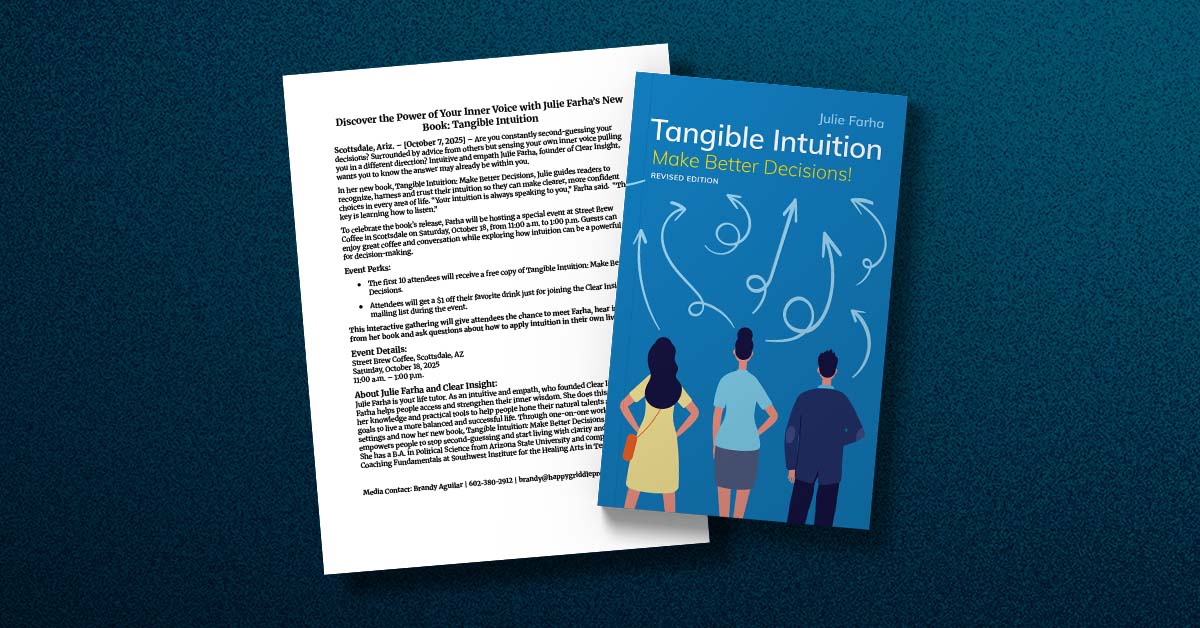
Answer: Start by practicing with small decisions, notice how different choices feel in your body. Research on somatic awareness indicates that developing body awareness can enhance decision-making and emotional regulation. Keep a journal of your intuitive hits and what unfolds. Meditation, mindfulness, and energy practices, such as those in Julie’s “Tangible Intuition” method, can significantly strengthen your intuitive abilities. Studies indicate that people with heightened somatic awareness have better overall health outcomes and improved interpersonal relationships. The more you trust and act on your intuition in small matters, the clearer it becomes for major life decisions.
Feeling called to explore what your intuition is telling you about your relationships? Julie offers personalized, intuitive coaching sessions to help you navigate relationship transitions with clarity and confidence. Book a 30-minute consultation to discover what your inner wisdom already knows about your path forward.
Want more intuitive guidance? Join the Clear Insight community for insights on harnessing your intuition to navigate life’s transitions with greater ease and wisdom. Sign up for the Clear Insight community.
With clarity and insight, Julie.
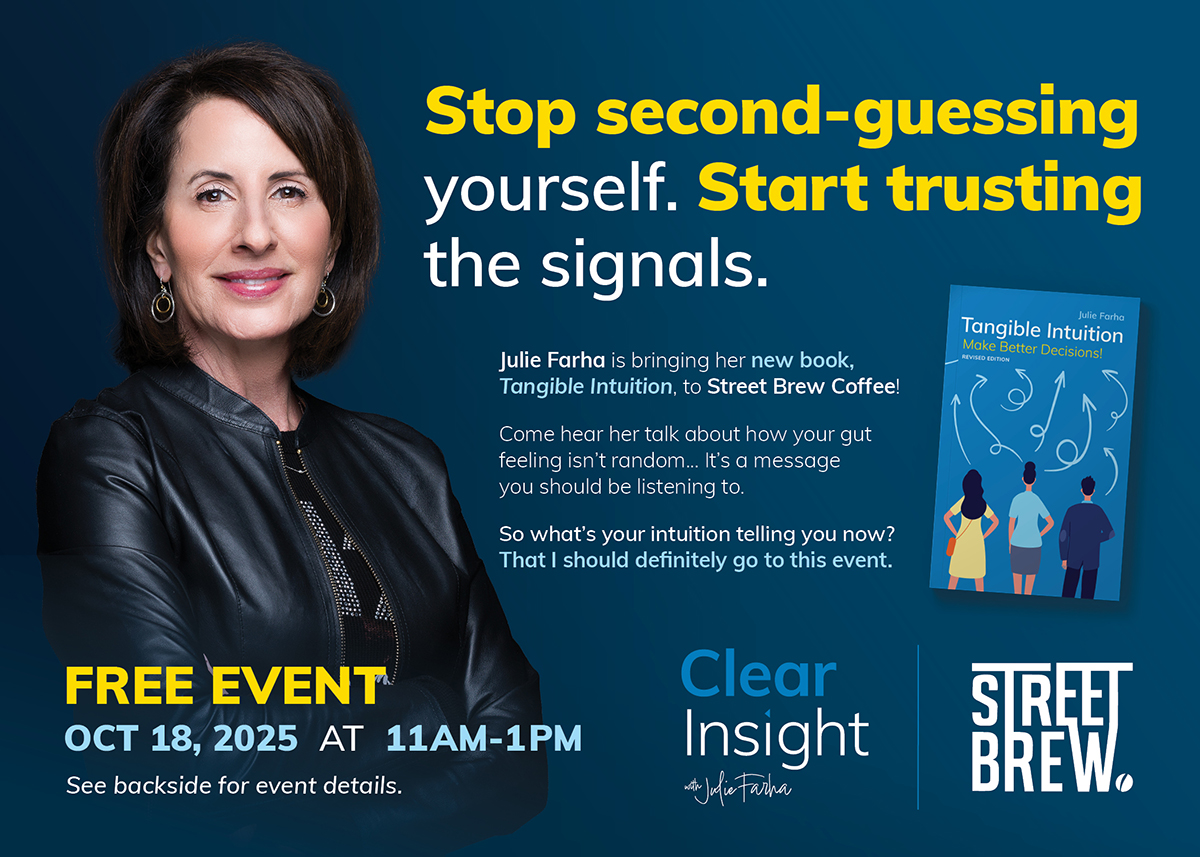
Julie Farha is an Empath, Intuitive coach, and author of “Tangible Intuition: Make Better Decisions,” and the creator of Soul Specialties. She helps people develop their intuitive abilities and create lives of purpose and fulfillment.
About This Article’s Approach
This article combines intuitive wisdom with evidence-based insights from relationship research, somatic awareness studies, and neuroscience to provide a holistic understanding of relationship transitions. While honoring the spiritual dimensions of relationships, we also acknowledge the psychological and physiological processes that shape how we connect and navigate change in them.
*The perspectives shared in this article come from my professional experience as an intuitive coach. They are not intended as medical or psychological advice. Always consult a healthcare professional for any health concerns.